How Continuum XR Built UG and Scaled a Social VR Game
Scaling a social VR game
Continuum XR didn’t start out as a game studio. They began as an immersive tech team, building AR, VR, and interactive experiences across a wide range of projects. Over a few years, that work added up to hundreds of shipped experiences and a lot of hard-earned knowledge about how people move, interact, and connect in virtual spaces.
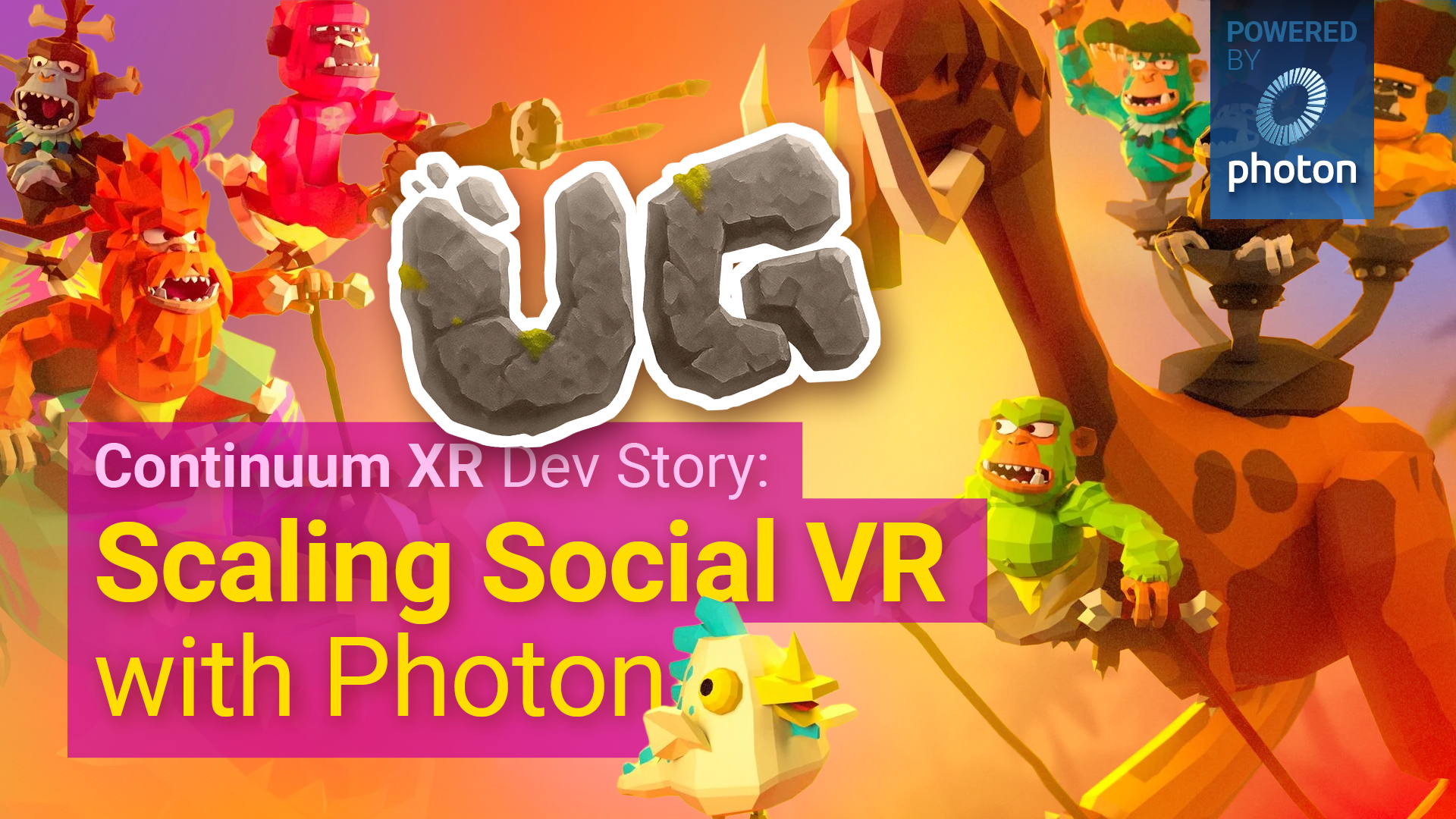
Games eventually became the natural next step. After working on a VR title called Sail, the team decided to focus on building their own games, leaning into everything they had learned along the way. That path led to Monkey Doo, then Cactus Jam and most recently UG, which quickly became one of the fastest-growing and highest-rated games on Meta Quest.
In this interview, the Continuum XR team breaks down the creation of UG, puts physical movement and social play at the center of the conversation, and shows how Photon Fusion enabled rapid development without multiplayer friction. It’s a look at what it takes to grow a VR game from early ideas to a large, active community.
Key Takeaways
- Designing VR around physical movement creates stronger social experiences:
UG was built with physics-based locomotion and embodied interaction at its core, making movement itself a primary form of player expression.
- Starting with a reliable networking solution speeds up development:
Using Photon Fusion from the beginning allowed the team to iterate faster and focus on gameplay instead of building and maintaining netcode.
- Scalable networking is critical for large social VR spaces:
Features like Fusion’s Area of Interest made it possible to support larger worlds and concurrent players while keeping performance and bandwidth under control.
- Smooth, low-latency movement is non-negotiable in multiplayer VR:
Client-side prediction helped maintain responsive locomotion and player comfort, even during fast-paced, physics-driven interactions.
- A strong technical foundation enables sustainable growth:
Photon Cloud’s stability supported UG’s rapid scaling and freed the team to focus on community, moderation, and long-term feature planning.
“Using Photon meant multiplayer was never the thing holding us back. It allowed our small team to move faster, test earlier, and spend more time on gameplay and community instead of solving problems that had already been solved.” – Spencer Cook, CEO Continuum
Could you provide a brief overview of Continuum XR, its history, and its overarching vision in the game development industry?
Continuum started as an immersive technology creative agency. In our early years, we worked across AR, VR, and interactive installations; everything from digital kiosks for the NBA, and motion-tracked projection mapping to AR experiences at the Cannes Film Festival and mobile games for brands like Pepsi, Coca-Cola, Mountain Dew, and Red Bull. Over roughly three years, we completed more than 200 immersive projects.
Our shift into game development happened naturally. We were contracted to help build a VR game called Sail, and that project sparked our passion for VR games. After the Sail contract ended, we decided to focus on building our own titles. That led to Monkey Doo, which has surpassed 1.5 million downloads, followed by Cactus Jam, and most recently UG, which became the fastest-growing VR game and the highest-reviewed game on Meta Quest within two months of release.
Our long-term vision is rooted in the belief that games are one of the most important drivers of mainstream adoption for immersive technology. Games help people learn how to move, interact, and feel comfortable in spatial computing. As long as there’s an audience for VR, we’ll continue building games, and we expect many studios, including ours, to eventually evolve into creating content for future AR wearables.
UG features unique dynamics like hatching dinosaurs and using arms for locomotion (similar to other successful VR titles). Could you tell us about the original spark behind the game’s core concept and how you decided on VR as the ideal medium to bring this physical and social experience to life?
We knew early on that we wanted to build a VR game, so the process started with studying what worked best in both VR and traditional games. We spent a lot of time playing and analyzing successful titles to understand what made them feel great, especially from a movement and social perspective.
Gorilla Tag was a major influence. Its physics-based locomotion proved that physical movement could be intuitive, fun, and deeply social, so adopting a similar style of locomotion felt essential for UG. At the same time, we looked at games like Underdogs, which showed how satisfying and expressive well-designed movement systems can be in VR. We wanted UG’s movement to feel just as natural and rewarding.
On the gameplay side, we were inspired by the sense of discovery and collection found in games like Pokémon, combined with the playful tone of Yeeps and the social energy of Animal Company. Those influences came together in the idea of hatching and raising dinosaurs,something that felt inherently physical, social, and emotional.
VR was the obvious medium for this experience. The combination of embodied movement, proximity-based social interaction, and hands-on mechanics allowed us to create a game that wouldn’t translate the same way on any other platform.
Many solo or small teams find multiplayer networking to be the most daunting obstacle. When you first started prototyping UG, what made you choose Photon Fusion to handle synchronization and the core netcode, and how quickly did adopting that solution accelerate your ability to focus on compelling gameplay?
When we built Monkey Doo, we spent a lot of time evaluating different multiplayer solutions. Networking was the biggest unknown, so we needed something stable, well-supported, and flexible enough to grow with us. After comparing the available options, Photon Fusion stood out as the best foundation we could build on long term.
By the time we started prototyping UG, that earlier decision paid off. Fusion gave us a solid, predictable synchronization layer from day one, which meant we didn’t have to reinvent core netcode or troubleshoot low-level networking issues. Instead, we could focus on designing and refining gameplay, movement, and social interactions,the things that actually define the player experience.
The impact was immediate. Having multiplayer “just work” early on allowed us to playtest faster, iterate more confidently, and make better creative decisions sooner. It shifted networking from being a blocker to being an enabler, and that acceleration was critical in getting UG to where it is today.
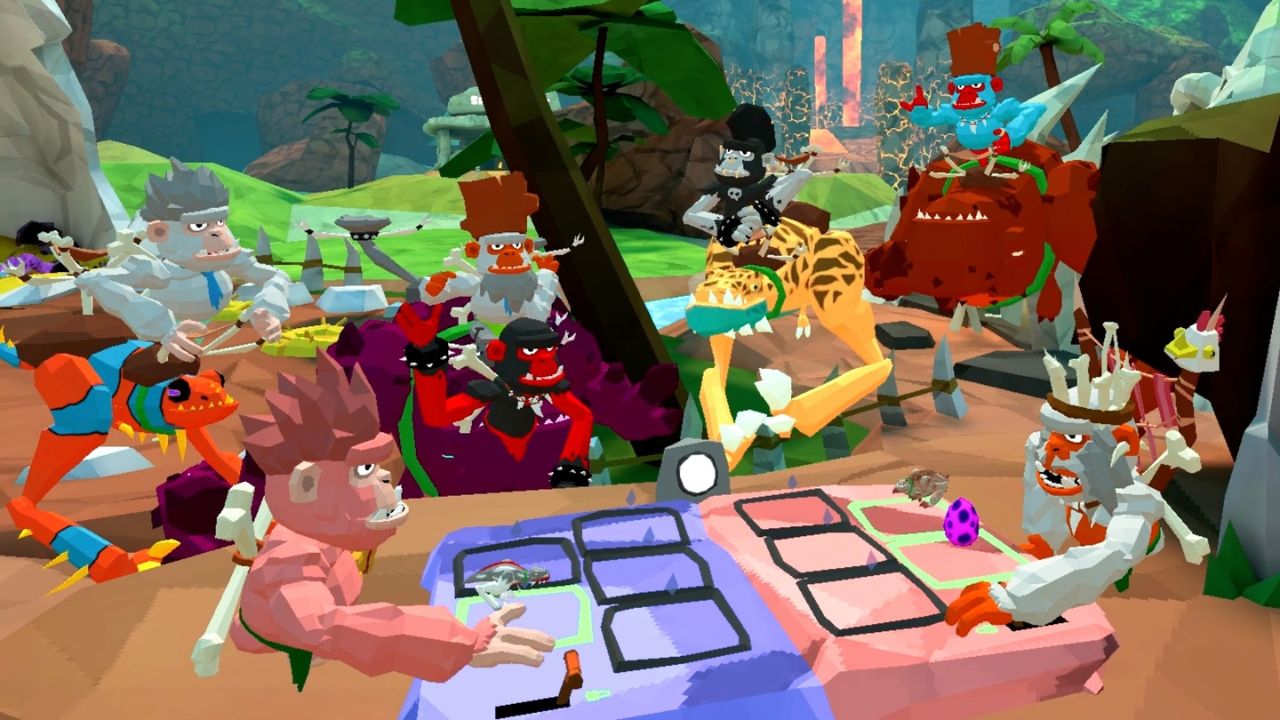
UG has cultivated a massive, active community focused on dynamics like earning currency (bones, gold, nugs), hunting, and trading. How crucial was having a stable networking SDKto support these intensive, real-time social interactions and the emergent gameplay loops your players created within the public lobbies?
A stable networking foundation was absolutely critical. There’s a lot happening behind the scenes that players never see, and in-game currency is a good example of that. Things like earning, trading, and syncing currency across players may feel simple on the surface, but they require secure, reliable coordination in real time.
For UG, these systems are deeply tied to social play. Public lobbies, trading, hunting, and emergent player behavior only work if everyone trusts that the game state is consistent and fair. Any instability quickly breaks that trust, and once that happens, it can undermine the entire experience.
Having a dependable networking SDK allowed us to support these systems with confidence. Instead of worrying about synchronization or edge cases under load, we could focus on designing meaningful gameplay loops and let the community take them further than we originally imagined.
UG often features large, concurrent social lobbies where players connect and interact. How did Fusion’s high-performance architecture, which includes mechanisms like a configurable Area of Interest (AOI), enable you to optimize the game and manage potential bandwidth concerns necessary for these expansive VR environments?
VR is a challenging platform to optimize for, especially when you’re supporting large, social spaces. Performance, bandwidth, and player comfort are all tightly connected, so inefficiencies show up quickly.
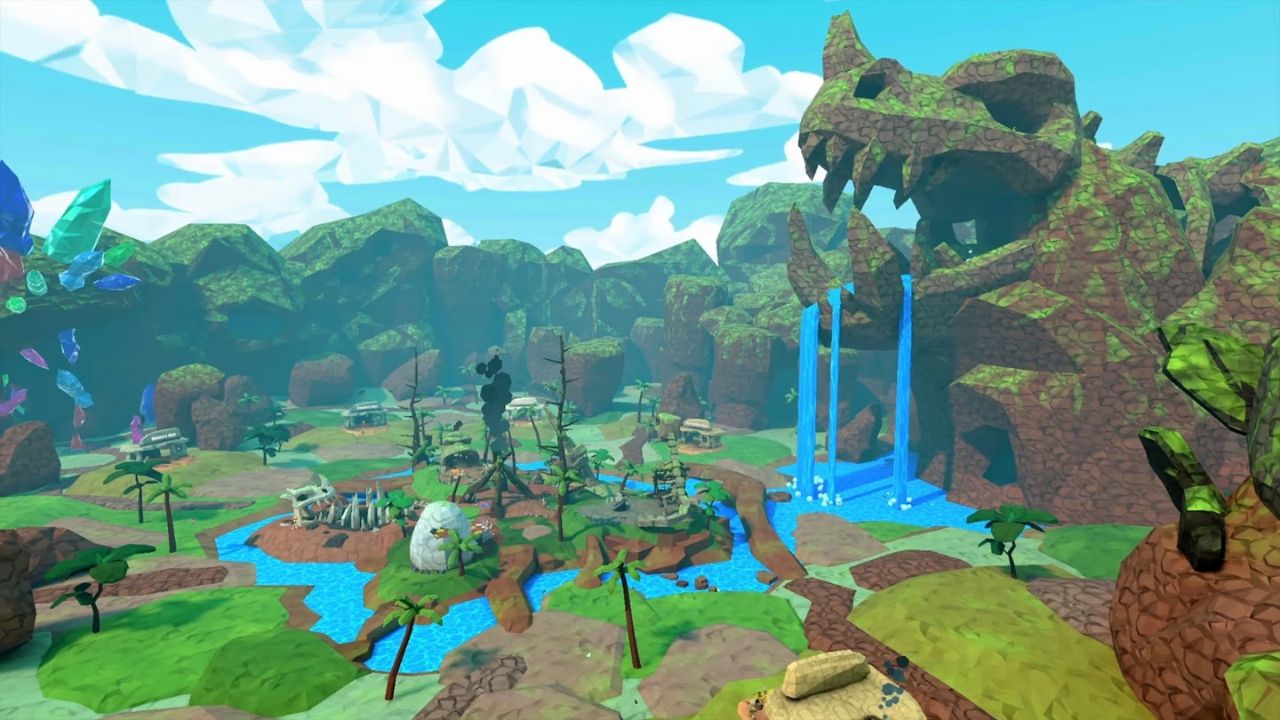
Fusion’s Area of Interest (AOI) system gave us a practical way to scale those experiences. By only synchronizing what players actually need to see and interact with, we were able to support larger worlds and more concurrent players without overwhelming the network or the headset.
This allowed us to build expansive environments where players can explore, hunt, trade, and socialize without constantly being pushed into new lobbies. Just as importantly, it freed up bandwidth and performance headroom, which we could then reinvest into more interactive elements and richer gameplay instead of fighting technical constraints.
For fast-paced interactions in VR, such as quick player movement, Client-Side Prediction is vital for maintaining a smooth, responsive experience. How did leveraging Fusion’s systems help mitigate latency and avoid the “jerky movement” that can plague multiplayer action, especially when integrating quick locomotion and physics interactions?
Latency can hurt any multiplayer game, but in VR it’s especially critical,poor responsiveness doesn’t just feel bad, it can make players uncomfortable or even sick. Because UG relies on fast, physical locomotion and frequent player interaction, smooth movement was non-negotiable from the start.
Fusion’s client-side prediction systems allowed us to keep player movement feeling immediate and natural, even under real-world network conditions. By predicting motion locally while staying in sync with the authoritative game state, we were able to avoid the “jerky” movement that often breaks immersion in multiplayer VR.
This made a noticeable difference during playtesting. Players felt more connected to their own movement and to each other, which helped preserve comfort, immersion, and confidence in fast-paced social interactions.
The Meta charts demand consistency and high uptime. What was your experience relying on the Photon Cloud infrastructure in handling UG’s rapid scaling and high traffic volumes, particularly ensuring reliability and performance for millions of potential monthly active users?
Player expectations are high, especially when real money is involved. If servers are unstable or gameplay feels unreliable, players lose trust quickly,and it’s hard to earn that trust back.
As UG scaled rapidly, having dependable infrastructure was essential. Photon Cloud handled traffic spikes and growing concurrency without becoming a bottleneck, which allowed us to focus on running and improving the game instead of reacting to outages or performance issues. That consistency mattered not just for uptime, but for maintaining confidence in things like in-game purchases and persistent progression.
Reliable performance at scale helped us meet Meta’s expectations and, more importantly, our players’ expectations. It allowed UG to grow without compromising the experience that brought players in to begin with.
UG has generated strong community engagement, but this social intensity also brings challenges, including player toxicity and issues like scamming in trades. As developers, how do you approach balancing the need for an open, social framework with implementing moderation and safety features to protect the integrity of the game experience?
Building a multiplayer game,especially one with open voice chat,comes with real responsibility. Player safety is part of the job, and with a platform that skews toward a younger audience, it’s something we take very seriously.
We spent a lot of time evaluating voice moderation options because manual moderation doesn’t scale, and inconsistent enforcement can quickly damage player trust. We ultimately landed on VoicePatrol, which gave us automated, affordable, real-time moderation, without disrupting the social flow of the game.
Having that system in place allows us to keep public lobbies open and expressive while still taking immediate action against toxic behavior. It’s helped us protect the integrity of the experience and maintain a healthier community without over-policing or breaking immersion for the majority of players who are there to have fun.
Looking back at your transition from initial prototype distribution (perhaps using systems like SideQuest/App Lab, similar to other major VR successes) to becoming a top-ten Meta Quest title: what was the biggest non-technical hurdle you faced during this growth phase, and how did a stable technical foundation with Photon allow you to overcome it?
The biggest non-technical challenge during that transition was community building. Growing and maintaining an engaged, healthy community takes constant attention, and it’s much harder than it looks,especially as player counts scale quickly.
As a small team, we had to be very intentional about where we spent our time. Having a stable, proven networking foundation meant we weren’t forced to divert resources into building and maintaining our own netcode. That freed the team up to focus on what really mattered during growth: engaging with players, listening to feedback, moderating effectively, and shaping the culture of the game.
That balance was critical. A strong technical foundation made it possible for us to invest more energy into the community itself, which ultimately played a major role in UG’s transition from early distribution to a top Meta Quest title.
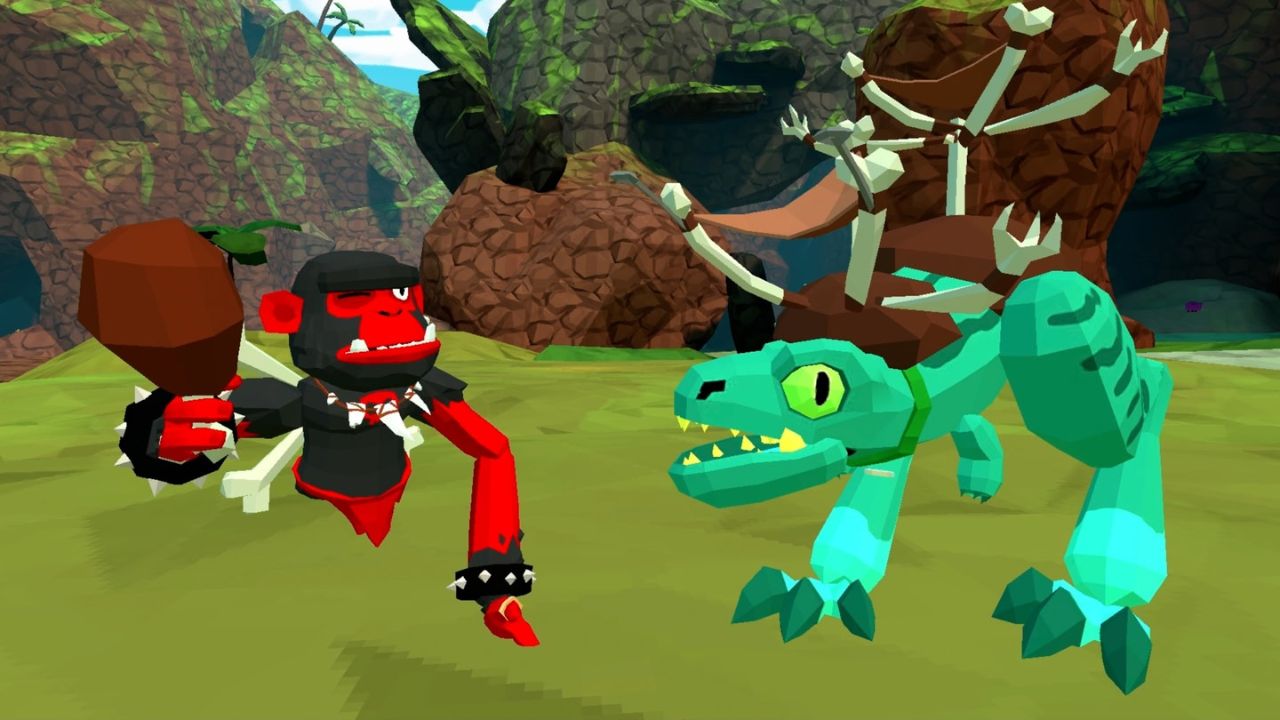
What is the long-term vision for UG? Are you planning to introduce larger concurrent player counts (Fusion supports up to 200 players at 60Hz) or explore next-generation features like Mixed Reality (MR) integration, and how is your partnership with Photon positioned to enable those future expansions?
Right now, our focus is on making player interactions as solid, responsive, and satisfying as possible. Before expanding outward, we want to make sure the core experience continues to feel great at scale.
We have a long-term roadmap aimed at giving players more meaningful things to do and more reasons to keep coming back. As the game evolves, we’re very interested in exploring larger concurrent player counts and mixed reality experiences, especially as the hardware and player expectations continue to mature.
Having a strong partnership with Photon gives us confidence in that roadmap. Knowing the underlying networking can scale with us allows us to think ahead and design features that we might not ship immediately, but can build toward over time without needing to rethink our technical foundation.
UG’s growth didn’t happen by accident. Building a large, social VR game means getting a lot of things right at the same time, from movement and performance to trust between players in shared spaces. For Continuum XR, having a reliable networking foundation made that possible.
Using Photon Fusion meant the team didn’t have to spend their time fighting netcode or scaling issues as the game grew. Instead, they could focus on gameplay, community and keeping the experience stable as more players joined in.
As VR continues its slow but inevitable march toward the mainstream and as XR and larger shared spaces come into view, UG stands as a case study in what happens when strong technical foundations meet clear creative intent. Build the world solid enough, and players will do the rest.