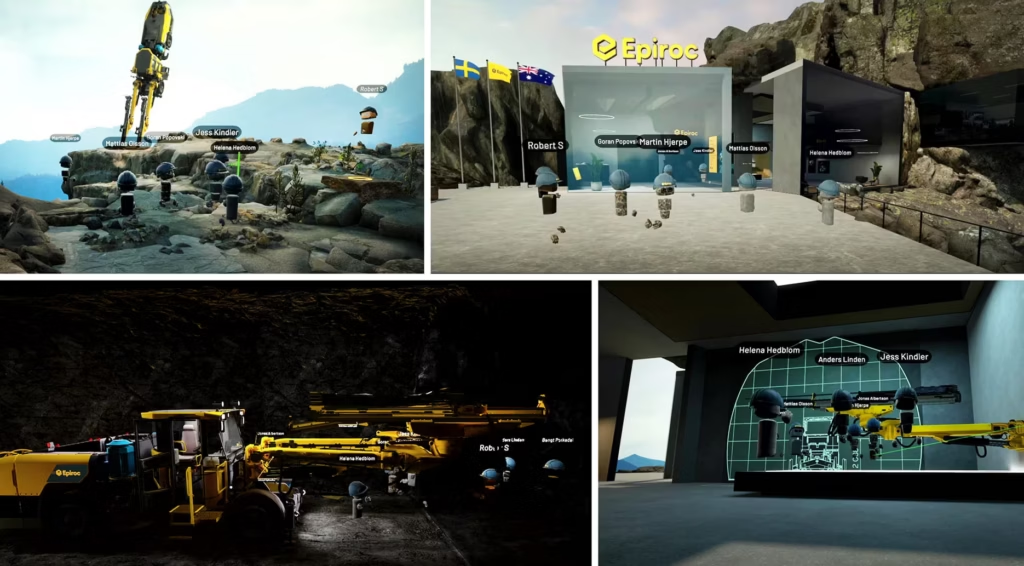
In 2021, as global travel came to a halt, Epiroc faced a critical challenge: how do you launch a massive underground mining machine when no one can see it in person? Traditional product demonstrations were no longer an option, yet the need to showcase the Boomer M20 to customers around the world remained urgent.
Partnering with Flowtropolis, Epiroc turned to extended reality (XR) to bridge the gap. What began as a practical solution, a shared virtual environment where customers and experts could interact with the machine in real time, quickly proved to be something far more powerful. By enabling immersive, collaborative experiences across locations and devices, XR didn’t just solve a temporary problem; it revealed a new way of working.
This case study explores how a single virtual product launch evolved into a scalable XR platform, transforming training, collaboration, and product development across Epiroc’s global operations.
Flowtropolis – Training
Challenge: A machine that could travel
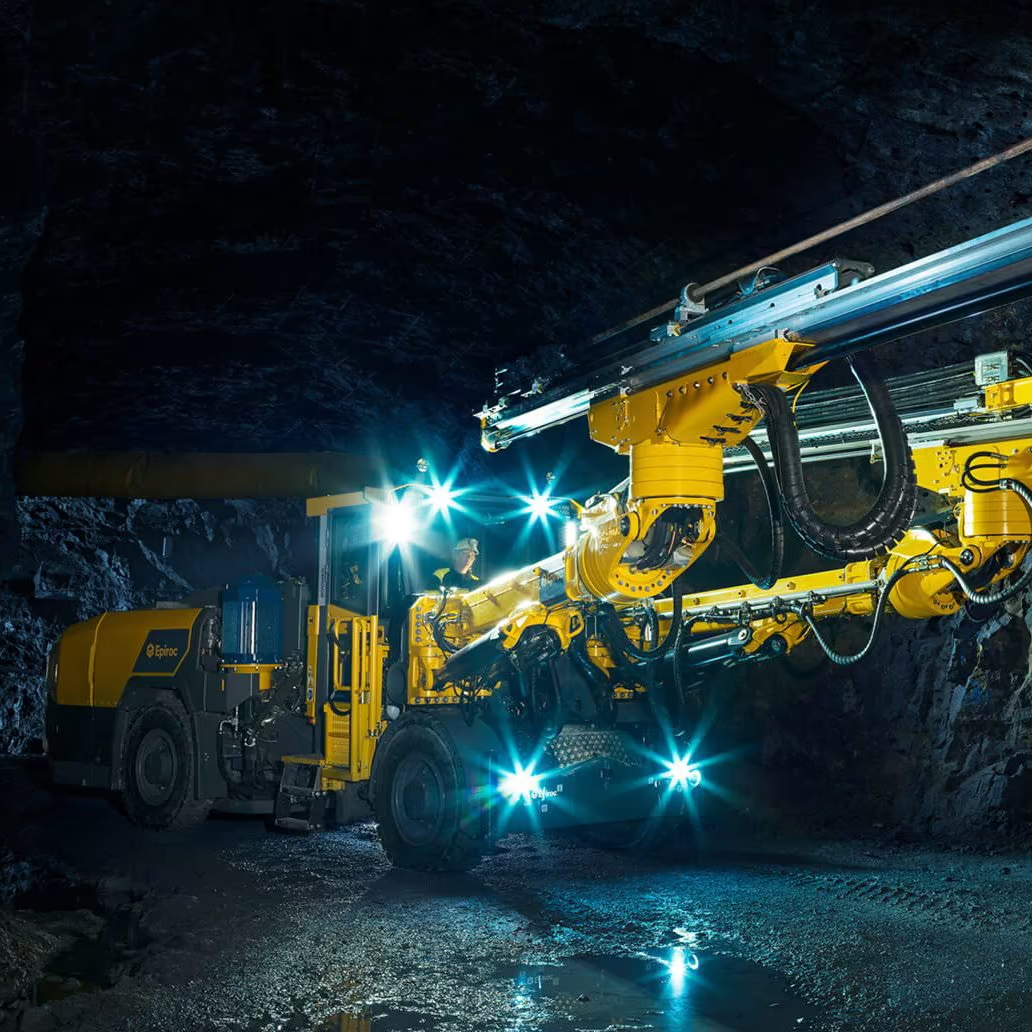
In early 2021, Epiroc was to launch a new mining machine. The Boomer M20 is a substantial piece of underground drilling equipment, not the kind of thing you can put in a presentation and expect people to understand.
The problem was that nobody could travel. The pandemic had closed borders, grounded flights, and made the standard approach impossible: bring customers to the machine, show them around, let them ask questions in front of it.
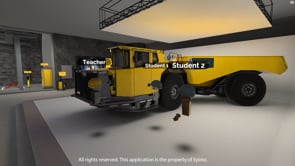
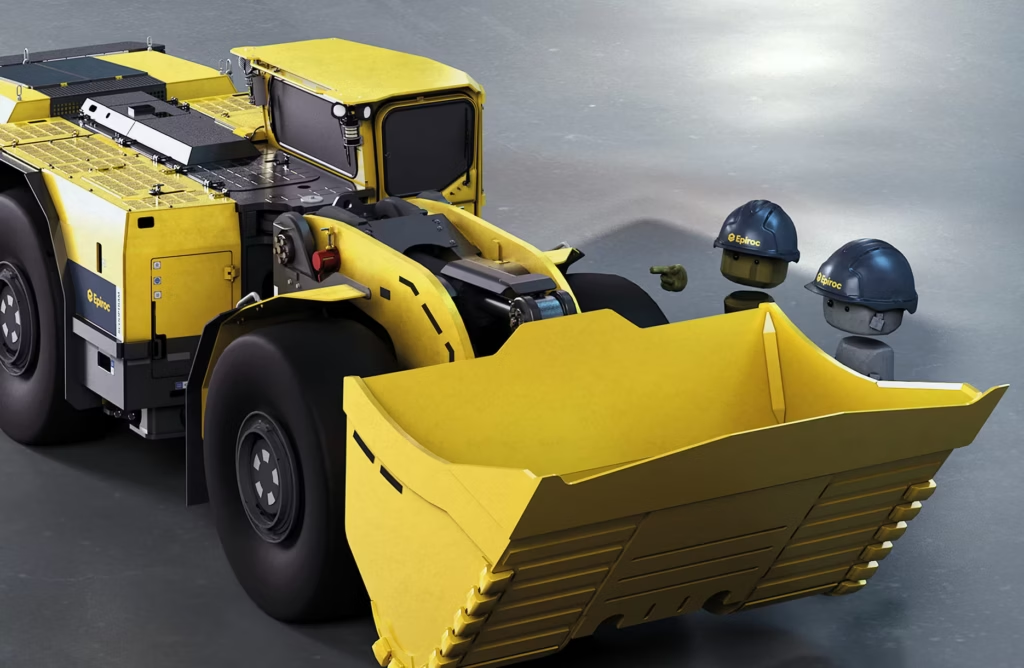
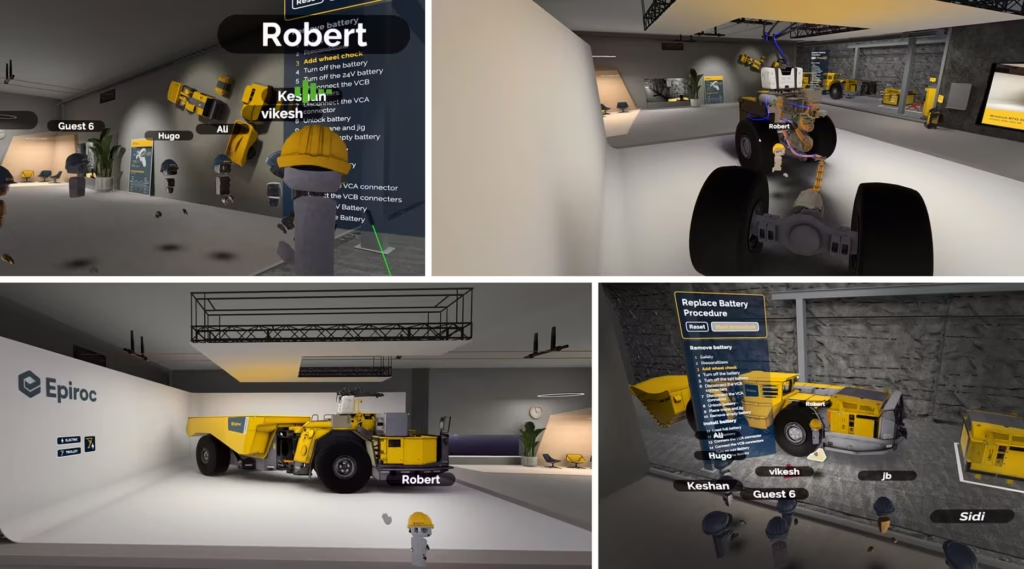
So Epiroc worked with Flowtropolis to try something else. With the Flowtropolis XR platform as a foundation, we built a shared VR environment where customers from different countries could step into the same virtual space, walk around the machine, and explore it in detail. A shared space, with Epiroc experts present, where a customer in one country could point at a component and ask a question while someone in another location answered it in real time.
One of the things that surprised people most was being able to remove panels and see inside the machine. That is genuinely hard to do with the physical version, for obvious reasons. In XR, it took seconds.
The showroom worked well, Epiroc reached markets they could not visit, and the team started asking a different question: where else does this apply?
Solution: Building on what worked
The work Epiroc did for that first product launch did not stay as a one-off. With Flowtropolis’ underlying platform, the same interaction patterns, workflows and governance tools became the starting point for training programs, internal design reviews, safety onboarding, product development collaboration, and any situation where engineers, trainers or sales teams needed to gather around the same 3D material without booking flights or waiting for a physical prototype.
Over the last couple of years, Epiroc has continued to build applications on the platform, some customer-facing, some internal. What connected them was the same shared infrastructure running underneath all of it. Each new use case started from the same platform, interaction patterns and workflows rather than from scratch, which changes the cost picture considerably over time.
Platform and Devices: One environment, many ways in
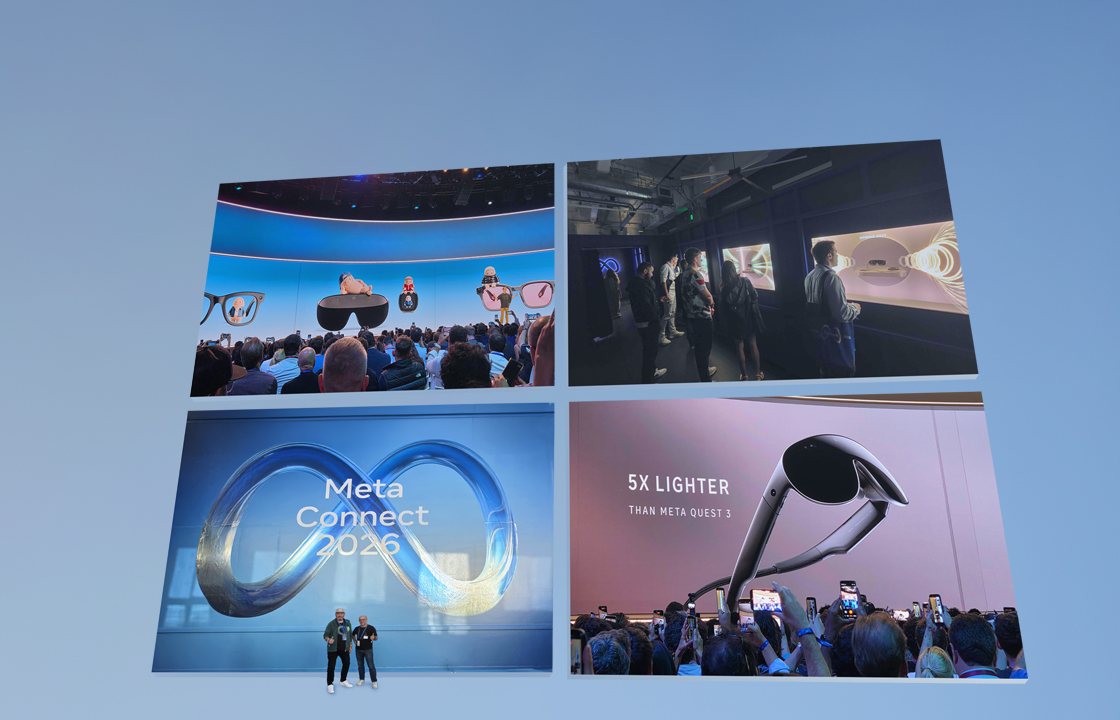
Flowtropolis is built on Unity and deployed primarily on Meta Quest headsets, with Meta Quest 3 as the current standard at Epiroc. The platform also runs on web and desktop, which matters in practice. Not everyone joining a session is in a headset, and in an industrial setting that is rarely practical to require. A trainer might run the session in VR while an engineer reviews from a laptop and a remote expert joins from desktop. They are all in the same environment, seeing the same things and interacting in real time, and Photon is what keeps that experience in sync across all of them.
Use of Photon: Why multi-user was not optional
In early XR projects, one person could step into a virtual space and find it genuinely useful. But the moment they wanted to involve a colleague, a trainer, an expert or a customer, things fell apart. They had to describe what they were seeing instead of simply showing it. If you wanted someone else to understand what you were looking at, you were back to explaining it with words.
That frustration shaped how we built Flowtropolis. In most industrial XR situations, the value comes from people being in the same environment together: a trainer and a group of new hires, a design team spread across three countries, a customer and a sales engineer looking at the same machine at the same time.
Photon is the networking engine behind the multi-user layer in Flowtropolis. It handles real-time synchronization across participants and keeps sessions stable when people join from different locations and devices, at the scale industrial enterprise applications require. When a group joins the same XR environment and interacts with the same objects in real time, Photon is what keeps that experience coherent.
Multi-user was a design decision from the start, because the use cases we were building for required it.
About Epiroc: From one launch to lasting capability
Epiroc is a global productivity partner for the mining and infrastructure industries, with equipment and services used in demanding environments around the world.
Over time, their use of XR has grown from an initial product launch need into something broader: training, internal collaboration, design work. What has shifted most is not the technology but how Epiroc relates to it. Their teams now build and update applications themselves rather than commissioning them externally. That internal capability is what makes XR stick rather than stay as a pilot.
About Flowtropolis: XR that grows with you
Flowtropolis is an industrial XR platform that helps companies build, deploy and scale shared XR applications across use cases such as training, design, operations and customer engagement.
The platform is built around the idea that XR becomes far more useful when it can be reused across teams and workflows rather than rebuilt each time. That is what made it possible for Epiroc to grow from one product launch into a broader internal XR capability across the business.
Conclusion
What started as a response to a travel restriction became a long-term strategic advantage. By building on a shared XR platform powered by Flowtropolis and real-time networking through Photon, Epiroc moved beyond one-off virtual experiences to establish a scalable, reusable digital infrastructure.
The real shift was not just technological, but organizational. XR evolved from a workaround into an internal capability. One that empowers teams to collaborate, train, and innovate without the limitations of physical location or prototype availability. Instead of rebuilding solutions for each new need, Epiroc now expands on a consistent foundation, improving efficiency and reducing costs over time.
This case demonstrates a broader lesson for industrial enterprises: XR delivers its greatest value not as a single-use tool, but as a platform that grows with the business.
Ready to build shared experiences that scale?
Epiroc’s journey shows what becomes possible when immersive technology moves beyond a single demo and becomes a reusable platform for collaboration, training, and product innovation. With Photon powering the real-time multi-user layer, teams can bring people together inside the same digital space, whether they join from VR, desktop, or web.
If you are building an XR application, multiplayer game, virtual showroom, training simulation, or any experience where people need to interact in real time, Photon gives you the networking foundation to make it happen reliably and at scale.