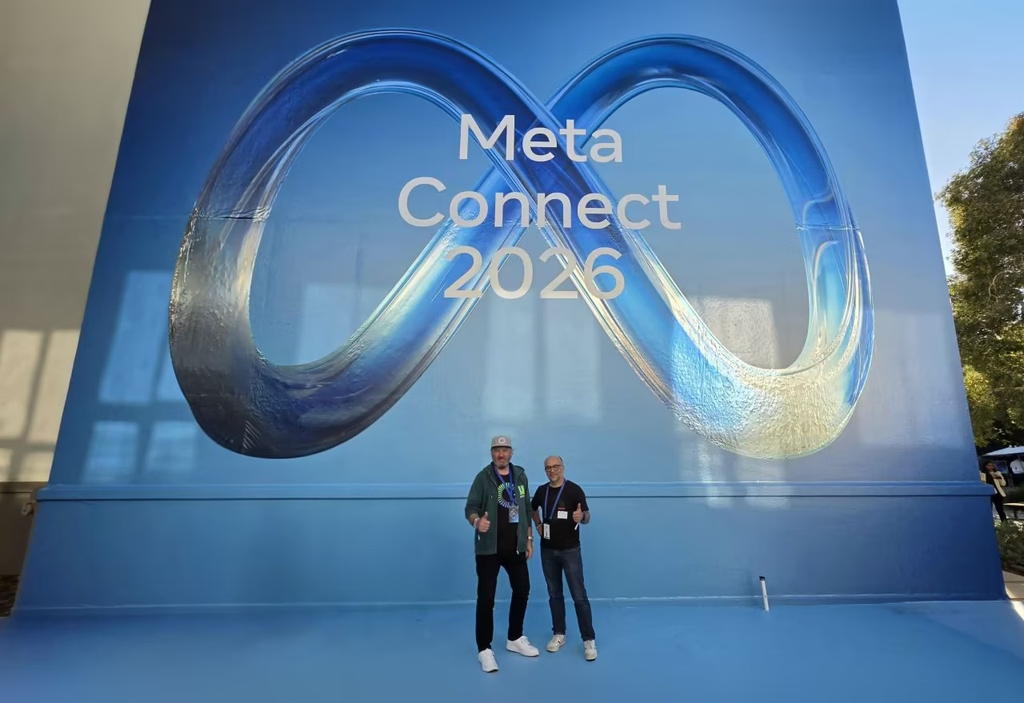
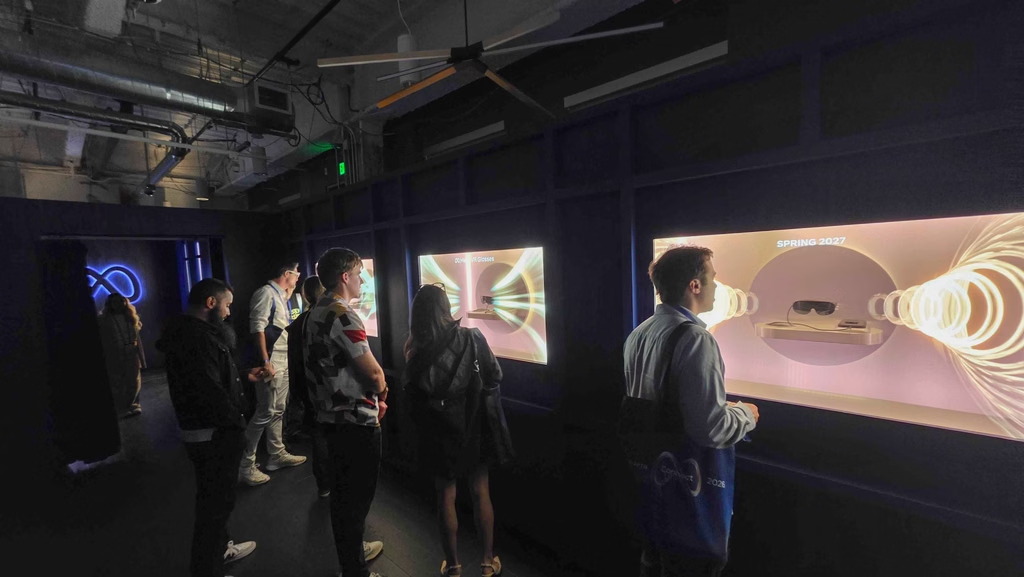
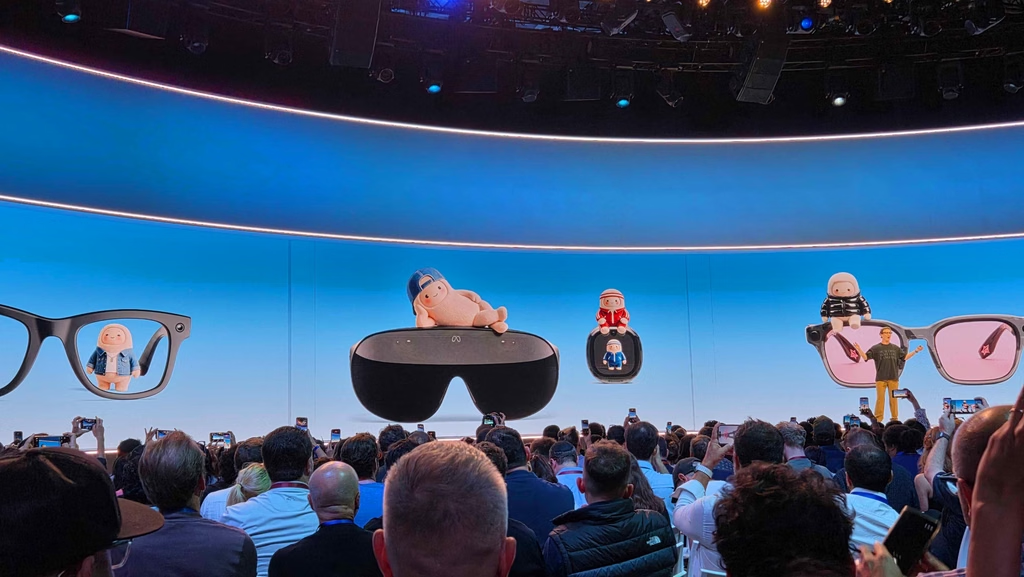
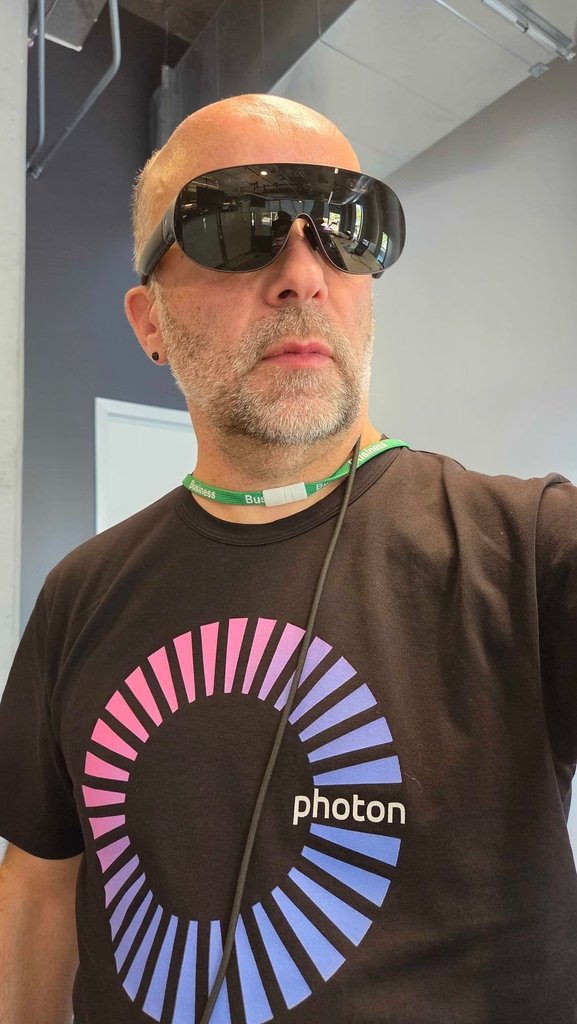
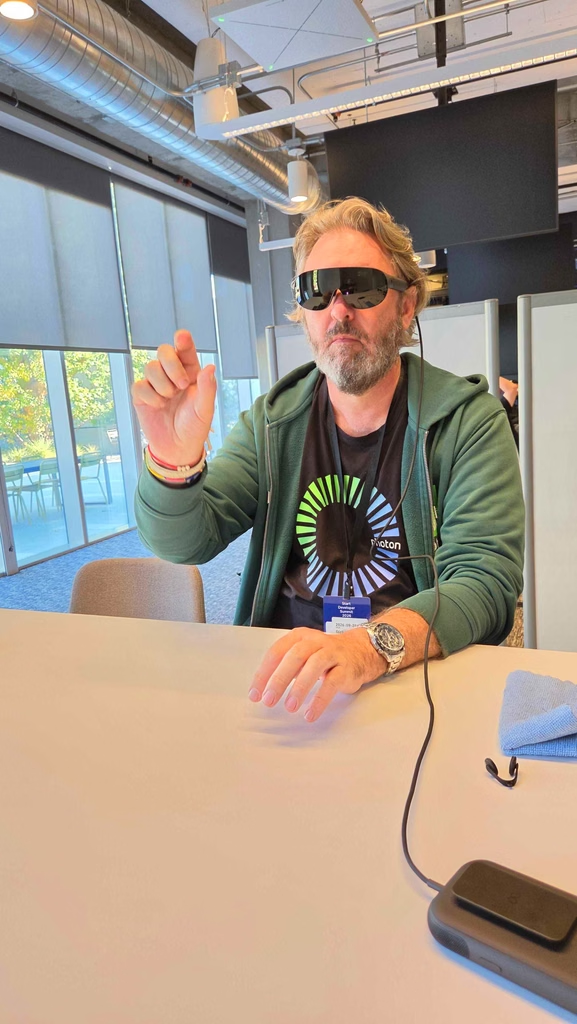
We’re back from an exciting week in Menlo Park at Meta Connect 2026, followed by the Meta Start Summit. After a rather gloomy stretch for the XR industry, it was genuinely refreshing to feel a renewed sense of excitement across the XR community.
Much of that energy was sparked by Meta’s new VR Glasses and, in particular, the form factor behind them. We had the chance to try the glasses ourselves in a private session, and came away sharing much of that excitement. There’s a lot to be intrigued by here, and we’re excited to see where Meta takes this new direction.
Below are our takeaways from the announcements, written from the perspective of a team building networking tools for XR and multiplayer developers.
Smart glasses: three tiers, three different bets
Meta now covers a broad spectrum with its Ray-Ban line, ranging from a model with a monocular display to audio-only glasses with no camera at all.
Meta Ray-Ban Display
The Display is finally launching in Europe, with a price restrained enough to remain competitive. What we’re most curious about, however, is enterprise adoption. The monocular display is a specific form factor, and it won’t be the right fit for every user or use case.
Meta Ray-Ban Gen3
No radical redesign here. Gen 3 is a collection of thoughtful, polished upgrades to what is already Meta’s best-selling pair of glasses. When a product is selling well, refining the formula rather than reinventing it makes sense.
Meta Ray-Ban Audio
The Audio model sits at the opposite end of the spectrum from the Display model. It’s the simplest tier and removes the camera entirely, addressing privacy concerns head-on. We would have liked to see a modular camera option, allowing owners to add one when needed. Hopefully, that’s something Meta will consider for a future generation. Notably, this model also has no light indicator for audio recording.
Regardless of the smart glasses model, we’re continuing to expand our integration efforts beyond XR. A key focus is bringing the full power of Photon’s Video and Voice SDKs to smart glasses. We’ve already demonstrated what’s possible with our samples, which enable real-time video and voice streaming directly from Meta Ray-Ban smart glasses using the Photon Video SDK today.
This is an important step for us: smart glasses can become a new endpoint for Photon-powered real-time communication, opening the door to entirely new video and voice experiences beyond traditional XR.
Meta VR Glasses: comfort first, and a clear path for developers
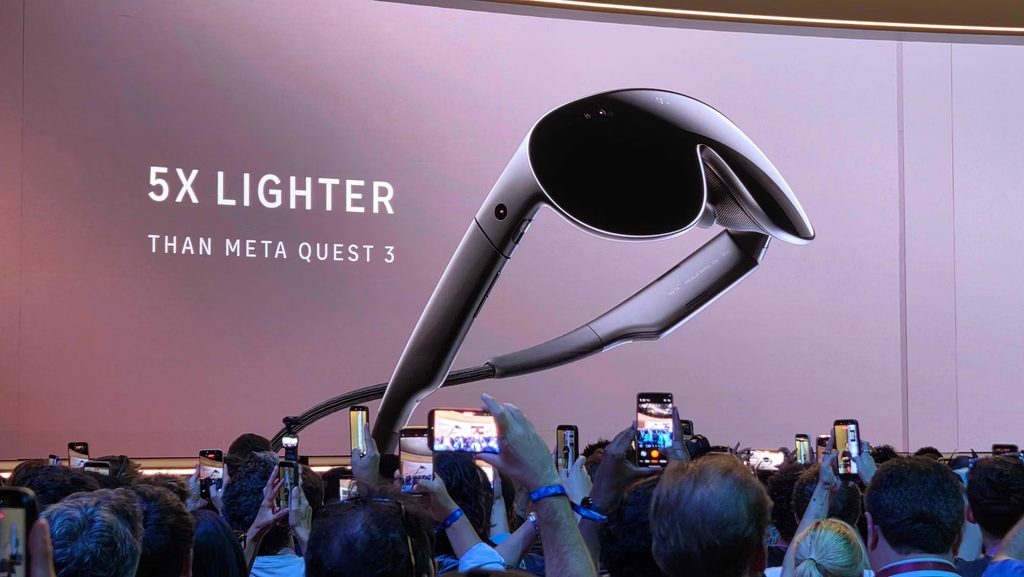
The Meta VR Glasses were the announcement of the week for many visitors. They’re light and slim, with a premium build quality that’s immediately noticeable. After spending time with them, we think Meta may have found a promising formula.
At the core are the capabilities that modern spatial apps depend on: reliable eye tracking, improved spatial understanding, and more refined hand tracking.
Display trade-offs
The biggest design decision is the form factor, and it has a major impact on the optics. Pixel density is higher, making text inside apps noticeably easier to read. The horizontal field of view drops to 70°, compared with 110° on Quest 3. That’s a meaningful trade-off, but the gain in comfort is substantial enough that we expect most users will find it worthwhile.
For developers, the narrower FOV is something to account for now. UI placement, peripheral cues, and anything that relies on the edges of the view will need a closer look. Meta is positioning the device heavily around video consumption, so the narrower FOV could be an important consideration. Hopefully, the reduced field of view won’t be a significant issue for customers, particularly in video-focused use cases.
Hand-tracking
The glasses ship without controllers, but they’re backward compatible with previous-generation Meta controllers. This shift away from controllers as the primary input method also has important implications for the way we think about interaction and interface design.
Until now, hand-tracking interactions could often be treated as optional, with most users relying on controllers instead. With the arrival of Meta VR Glasses, we’ll need to rethink that approach and treat hand tracking as the default interaction mode.
The lack of haptic feedback also raises another consideration. Without physical feedback from a controller, we’ll need to put greater emphasis on clear, meaningful audio and visual cues to make interactions feel responsive and intuitive.
Performance and tooling
Performance is slightly ahead of Quest 3, thanks in part to better optimization. Unity 6.7 will introduce further optimizations specifically targeting the Meta VR Glasses architecture. Unity has also already published guidance covering what developers need to know when building for this brand new device.
Getting ready before launch
The official launch is coming next year, but there’s already plenty we can do to get ready.
Emulating the target FOV directly on a Quest 3 or Quest 3S
Meta Muse: AI as the base layer
AI is now becoming the foundation on which Meta builds its products. Its Muse AI is appearing in a growing range of forms, from being built directly into the smart glasses, to the Muse Charm, a pocket-sized, Tamagotchi-style AI companion, and a new generation of developer tools.
The piece we found most interesting from a developer perspective is Muse Glimmer. It uses a hybrid local-and-cloud architecture: open-weight models run directly on the device, while more demanding workloads can be offloaded to the cloud-based Muse Spark model when needed.
What stands out is the level of control this gives developers. You decide exactly which prompts are sent to the cloud, while sensitive user context can remain entirely on the device. For apps handling personal or spatial data, that’s a powerful privacy guarantee and an important one to be able to make.
On our side, we want to make it easier for our customers to integrate AI into their development workflows. To support that, Photon will soon introduce AI skills for our SDKs, giving AI agents a deeper understanding of our technology and helping them deliver more effective results.
The part you can’t get from a livestream
The new hardware brings a real sense of momentum to the XR ecosystem. But for us, one of the most exciting parts of Meta Connect is simply being together with the XR community for a few days: meeting the people building the future of the platform and sharing ideas face to face.
What stood out most this year was just how much Meta put its experts directly in reach of developers. The teams were accessible, engaged, and genuinely eager to help us move our projects forward. We had direct conversations with the people building the tools and SDKs we use every day, could share our feedback in person, and discuss challenges and ideas directly with the teams who can act on them.
Those conversations will only strengthen the relationship between Meta and Photon. We share the same ambition: to give developers the best possible tools and SDKs to build the next generation of XR experiences. That shared vision is what makes the collaboration so exciting. By working more closely together, we can help developers move faster, experiment more freely, and turn ambitious ideas into multiplayer XR experiences of tomorrow.
The more intimate Meta Start Summit that followed the larger Connect event was another incredible opportunity to experience the energy, passion, and sheer enthusiasm that make this community so special. Being surrounded by people who are genuinely excited about building the future of XR was an absolute highlight of the week.
Looking ahead
The next few months are going to be incredibly exciting for XR, especially for the teams already preparing for the Meta VR Glasses launch next year. There’s a real sense of momentum building, and we can’t wait to see what developers create with this new generation of hardware.
A huge thank you to the entire Meta team for putting together such a fantastic event and for making the developer community feel so welcome. We’re leaving Menlo Park energized, inspired, and already looking forward to next year!